Respond faster, follow up smarter, and recover opportunities that usually slip through the cracks.
Pest control CRM + follow-up automation helps pest control companies capture leads, follow up faster, organize opportunities, send timely reminders, nurture unbooked leads, and track the path from first contact to booked job.
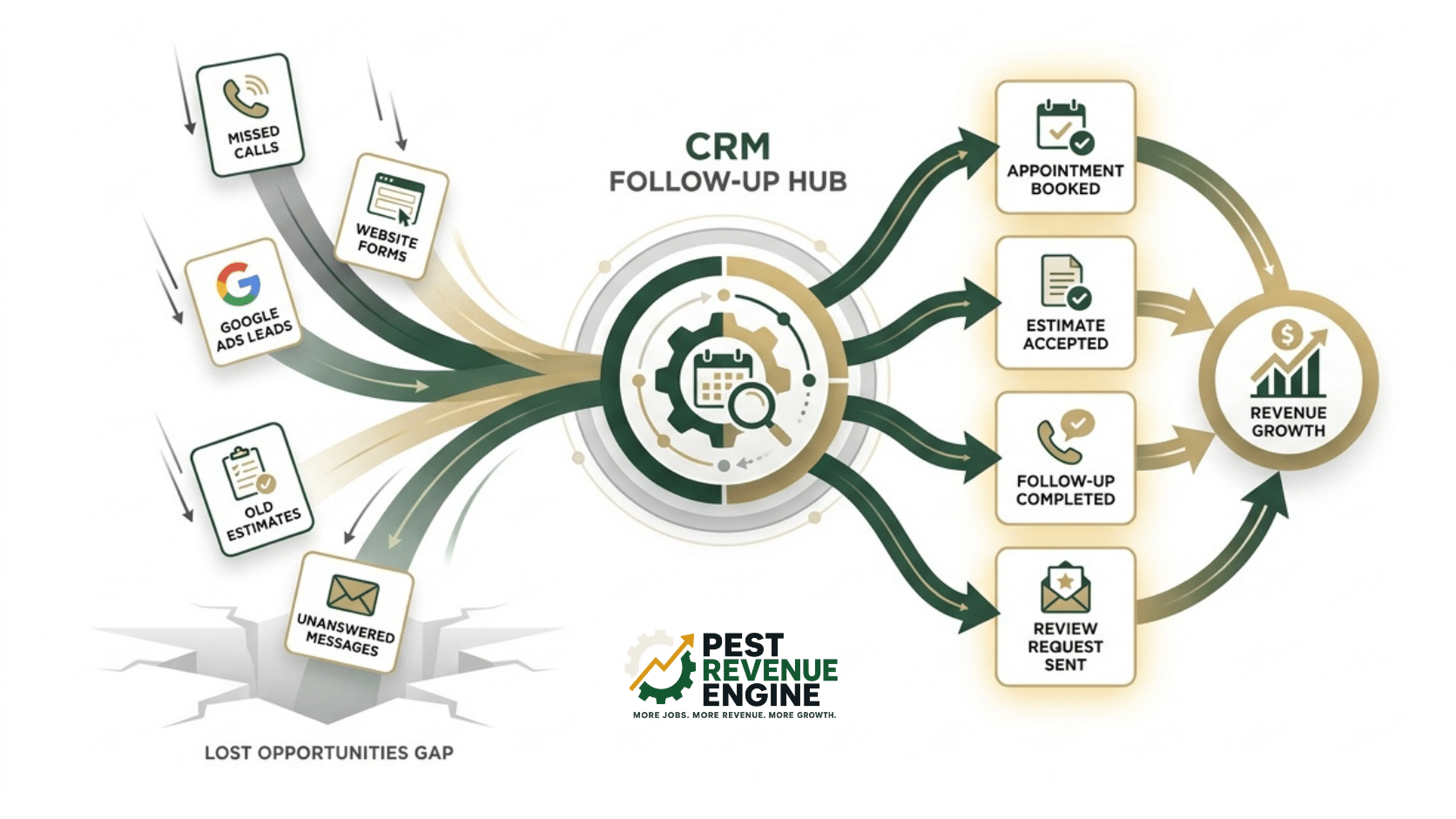

Most pest control companies do not lose revenue only because they need more leads.
They lose revenue because leads are missed, calls are not followed up with fast enough, form submissions sit too long, estimates go cold, and past customers are never re-engaged.
When a customer needs pest control help, timing matters.
If your team is busy, on another call, in the field, or trying to manage follow-up manually, opportunities slip through the cracks.
CRM automation helps protect those opportunities.
It gives your team a clearer process for responding faster, following up consistently, and tracking what happens after the lead comes in.
We help connect calls, forms, and lead sources into a clearer follow-up process.
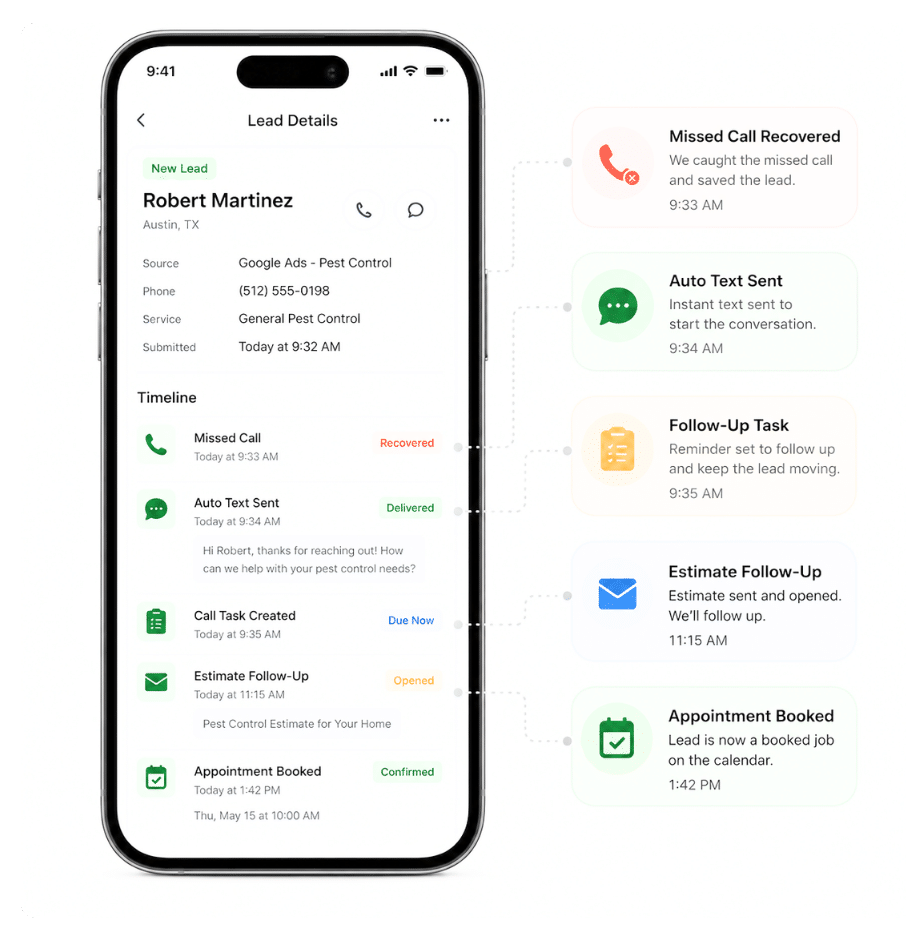
We help create workflows that respond quickly when a call is missed.
We help set up immediate follow-up touchpoints so new leads are not left waiting.
We create follow-up sequences for people who received an estimate but have not booked a service yet.
We help nurture leads who are interested but not ready to schedule yet.
We build campaigns that help bring past customers back for recurring or seasonal services.
We help reduce missed appointments and improve communication before service.
We help create follow-up messages that feel clear, timely, and useful.
We help organize contacts by service interest, lead stage, customer, or follow-up need.
We track response activity, follow-up performance, missed opportunities, booked jobs, and other growth indicators.
We build workflows with permission, opt-out, and platform requirements in mind.

We create structured workflows that improve response times, automate follow-up, track performance, and support revenue growth.
We review how leads currently come in, where they go, how quickly they are contacted, and where follow-up breaks down.
We set clear goals around response time, contact rate, missed call recovery, follow-up completion, booked jobs, and monthly or quarterly performance targets.
We define what should happen after a call, form submission, missed call, estimate, appointment request, or past customer opportunity.
We create the automations, messages, stages, triggers, tags, reminders, and follow-up paths needed to support the process.
We help connect activity to reporting so the business can see what is happening after leads come in.
We review performance, find weak spots, and improve the system as lead volume, services, and business goals grow.
Automation is not meant to replace the people in your business.
It is meant to support them.
The right CRM automation helps your team respond faster, remember the next step, reduce missed opportunities, and stay organized when lead flow increases.
It also helps owners see what is happening inside the sales and follow-up process.
That means fewer leads disappearing, fewer missed touchpoints, and a clearer path from first contact to booked job.
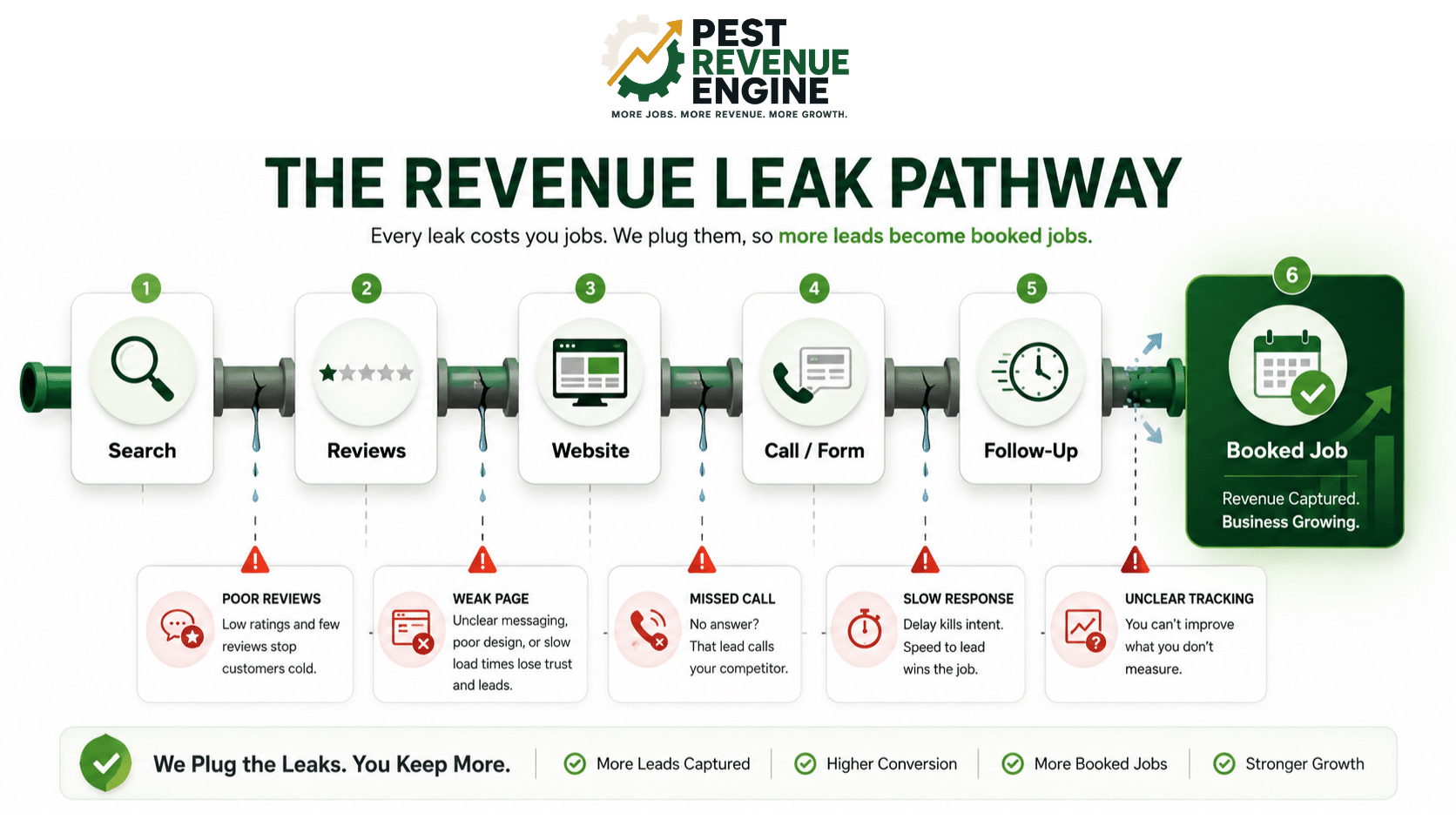
CRM automation works best when it is connected to the rest of your marketing.
Your website can generate form submissions.
Your ads can create the call.
Your email marketing can nurture the lead.
Your missed call automation can recover the opportunity.
Your reporting can show what happened next.
When those pieces are connected, your marketing becomes easier to track and improve.
That is why Pest Revenue Engine builds CRM automation as part of the larger growth system, not as a random set of workflows.
Schedule a discovery call to talk through your current CRM, follow-up process, missed opportunities, and where automation may help support growth.
Pest control CRM + follow-up automation helps pest control companies organize leads, automate follow-up, send reminders, recover missed calls, nurture unbooked opportunities, and track the path from lead to booked job.
Not always. We start by reviewing the tools your team already uses and look for the simplest path forward. The goal is not to overwhelm your staff with another system. The goal is to make follow-up easier, organize leads better, and give your team a clearer process they can actually use.
Possibly. Many pest control companies have software that stores customer information, but that does not always mean they have a true CRM process. A strong CRM system should help capture leads, organize opportunities, trigger follow-up, track missed calls, show where leads stand, and report what is turning into booked jobs. We review your current setup first, then identify what is working, what is missing, and what needs to be connected or improved.
For urgent pest control leads, follow-up should happen as fast as possible. The best standard is immediate automated acknowledgment and a human follow-up as quickly as your team can respond. Waiting hours can reduce the chance of booking because customers often contact multiple companies.
AI can help draft messages or suggest ideas, but it cannot replace a real CRM strategy. It does not know your sales process, service areas, team capacity, lead stages, compliance needs, CRM setup, follow-up gaps, or revenue goals unless someone builds the system around them.
AI can help draft content, but it cannot replace strategy. It does not know your market, service areas, customer questions, business goals, competitive gaps, reputation signals, or conversion strategy unless someone builds the content plan around those details.
No. The goal is not to replace your team. The goal is to support them with faster responses, reminders, organized pipelines, and follow-up workflows so fewer opportunities are missed.
Common automations can include missed call text-back, new lead follow-up, form submission replies, estimate follow-up, appointment reminders, review requests, past customer reactivation, seasonal campaigns, and internal team notifications.
A basic CRM automation setup can usually take 3 to 4 weeks. More advanced workflows with multiple lead sources, integrations, custom pipelines, reporting, and follow-up sequences can take 4 to 8 weeks or longer, depending on the scope.